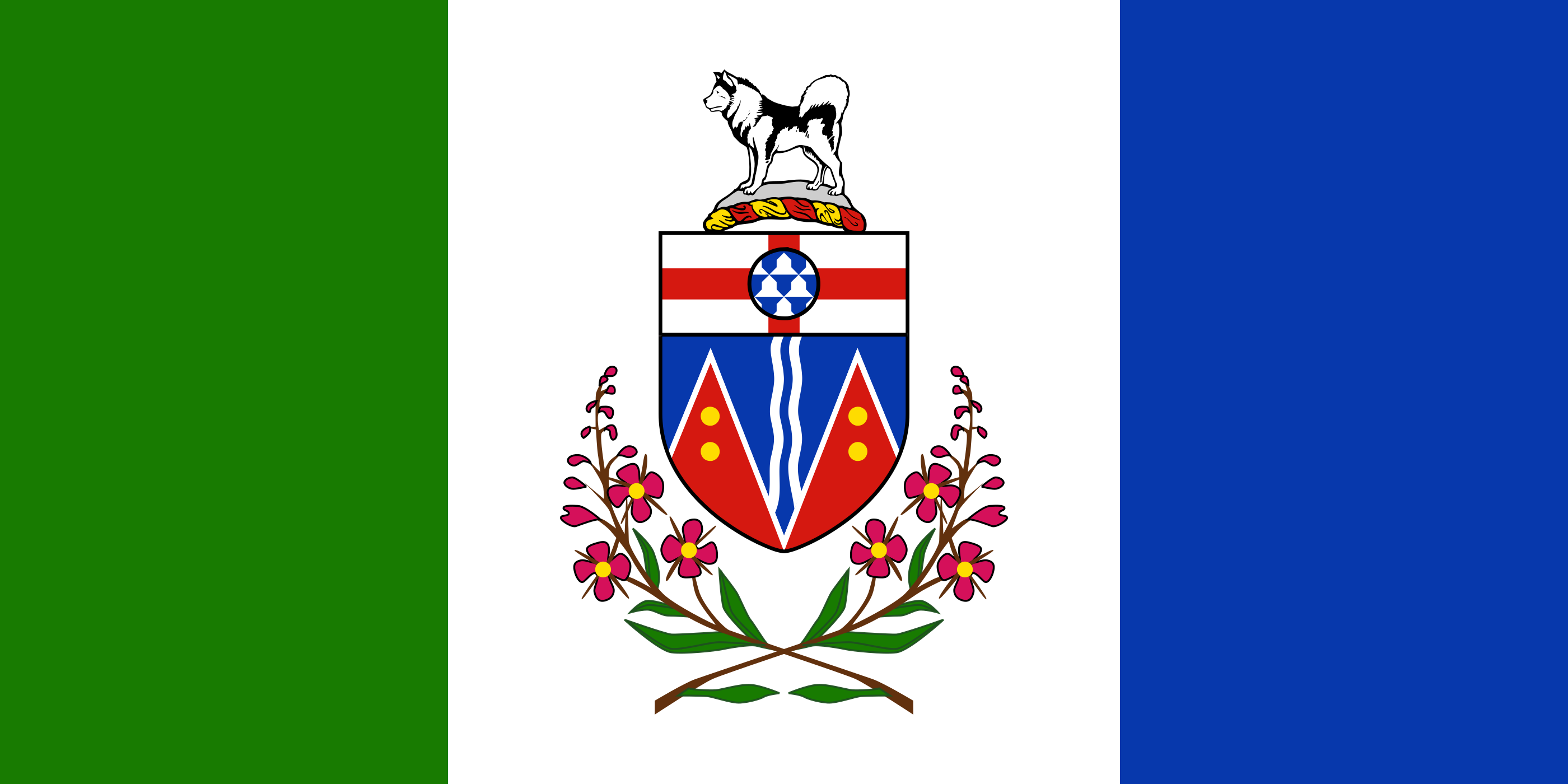

At a glance
| Capital | Whitehorse |
| Became a separate territory | 1898 |
| Legislature | Yukon Legislative Assembly (one chamber) |
| Seats | 21 |
| The federal representative | Commissioner |
| Head of government | Premier |
As of 2026: The Legislative Assembly has 21 seats, one for each of the electoral districts Elections Yukon set for the 2025 general election.
In numbers
How it’s governed
Yukon is a territory, so its powers come from a federal law, the Yukon Act, not from the Constitution. In principle Parliament could change them. In practice, Yukon now runs most of the same things a province does. See Why territories aren’t provinces.
- The Commissioner is appointed by the federal cabinet and performs the formal duties a Lieutenant Governor does in a province: giving assent to laws, opening the Legislature, appointing the cabinet. The role used to carry real power. Today the Commissioner acts on the advice of Yukon’s elected government, and the Yukon Act describes Yukon as having responsible government “similar in principle to that of Canada.”
- The Legislature is made up of the Commissioner and the Legislative Assembly, whose 21 MLAs pass Yukon’s laws.
- The Premier is the leader who can keep the confidence of the Assembly, normally the leader of the party with the most seats, and chooses cabinet from among the MLAs.
What makes it different
Party politics, unlike the other two territories
Yukon works much like a small province. Candidates run for political parties, and the party that can hold the Assembly’s confidence forms the government. Party politics began with the 1978 territorial election. This is the opposite of the Northwest Territories and Nunavut, which use consensus government with no parties.
Born in a gold rush
Yukon was part of the vast Northwest Territories until the Klondike Gold Rush brought tens of thousands of people north. In 1898 Parliament made it a separate territory so it could be governed directly. Dawson City was the first capital; the capital moved to Whitehorse in 1953.
From appointed officials to self-government
For decades, the federally appointed Commissioner ran Yukon’s government, with an elected council in an advisory role. Over the 1970s that changed. In 1979, according to Wikipedia’s article on Yukon, a letter from the federal minister, Jake Epp, rather than a new law, moved power from the Commissioner to the elected legislature. That set up responsible government in Yukon. The current Yukon Act, which came into force in 2003, wrote the arrangement into law.
Devolution: the first territory to manage its own land
On April 1, 2003, Yukon became the first territory to take over the management of its public lands, water, forests and minerals from the federal government. This transfer, called devolution, came with the new Yukon Act. The Northwest Territories followed in 2014, and Nunavut’s transfer is scheduled for 2027.
Self-governing First Nations
Yukon is a national leader in modern treaties. In 1993, Canada, Yukon and the Council for Yukon Indian People (now the Council of Yukon First Nations) signed the Umbrella Final Agreement, a framework for individual land claim agreements. Since then, most of Yukon’s First Nations have signed final and self-government agreements, according to Crown-Indigenous Relations and Northern Affairs Canada. These First Nations make their own laws on many matters for their citizens and lands, alongside the territorial and federal governments. See Self-government.
Languages
Under Yukon’s Languages Act, English and French can be used in the Legislature and the courts, and laws are published in both. The Act also recognizes the importance of Yukon’s Indigenous languages, which can be used in Legislative Assembly debates.
Courts
| Court | What it does |
|---|---|
| Court of Appeal of Yukon | Hears appeals from the Supreme Court and the Territorial Court. Its judges are drawn from the British Columbia Court of Appeal and from the courts of Yukon, the Northwest Territories and Nunavut. |
| Supreme Court of Yukon | The superior court: serious criminal trials, larger civil cases, divorce. Despite the name, it is not the highest court. |
| Territorial Court of Yukon | Hears most criminal cases, youth cases and family matters. |
| Small Claims Court | Smaller civil disputes. |
| Justices of the peace | Minor offences and other limited matters. |
See the court structure.
Local government
Yukon has eight incorporated municipalities, including the City of Whitehorse and the City of Dawson. Most other communities are unincorporated, with local services provided by the territorial government or by First Nations governments.
See Municipalities.
Sources
- Yukon Act (S.C. 2002, c. 7): preamble (responsible government), s. 4 (Commissioner appointed by the Governor in Council), s. 8 (Executive Council), s. 17 (the Legislature)
- Yukon devolution (Crown-Indigenous Relations and Northern Affairs Canada)
- Yukon Courts and Court of Appeal: justices of the BC Court of Appeal and from Yukon, the Northwest Territories and Nunavut
- About AYC (Association of Yukon Communities): the eight incorporated municipalities
- Languages Act, 1988 (text reproduced by Université Laval’s CEFAN, French) and Yukon language framework (Ministers’ Council on the Canadian Francophonie, 2025): use of English and French in the Legislature, laws and courts, and of Yukon Indigenous languages in the Legislature
- Yukon Legislative Assembly
- How the government works (Government of Yukon)
- 2025 Electoral Districts: 21 Districts (Elections Yukon)
- The judicial structure (Department of Justice)
- Self-government (Crown-Indigenous Relations and Northern Affairs Canada): “most First Nations in the Yukon” are self-governing
- Yukon (Wikipedia, as of November 2026): the 1979 letter from Jake Epp